


Uber Eats has offered a glimpse into how Kenyans ate, ordered and lived in 2025, releasing a report that mixes humour with data to show how food delivery has become part of everyday life.
The company’s 2025 Kenya Cravings Report, released in Nairobi on 10 December, highlights everything from ultra fast deliveries to unusually large orders, painting a picture of a country that values convenience and knows exactly what it wants.
According to the report, fried chicken remained Kenya’s most searched food on the Uber Eats platform, attracting tens of thousands of searches over the year. Pizza followed closely behind, continuing to dominate movie nights, late evenings and post exam celebrations. Grocery delivery also grew sharply, with items such as cooking oil, tomatoes and pasta increasingly ordered at short notice. One customer had a five litre bottle of cooking oil delivered in just 150 seconds.
Some orders stood out for their size as well as their speed. One customer placed a premium drinks order worth KES 109,000, while another spent KES 102,134 on a fast food delivery of almost 20 burgers and sides. A separate order, described in the report as a “Lover’s Marathon”, came to KES 80,400.
The report also highlights the habits of the platform’s most active users. Kenya’s top customer placed 718 orders in a single year, averaging nearly two orders a day. Another user spent more than KES 1.8 million over the year, placing fewer orders but at a much higher value per delivery. In one case, a courier and a customer were matched 59 times across 12 different eateries.
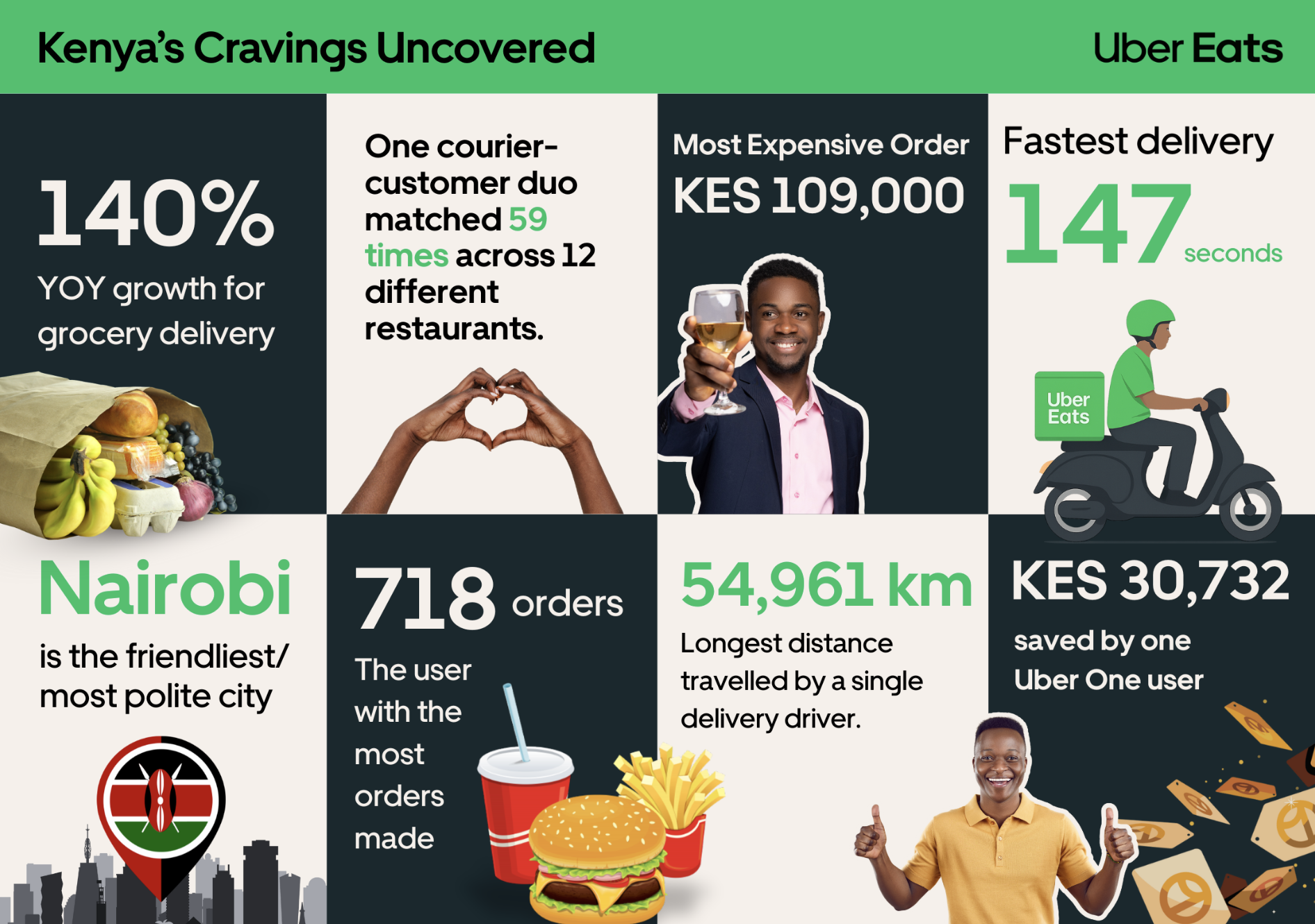
Delivery partners featured prominently in the data. One courier covered 54,961 kilometres over the year, a distance greater than the circumference of the Earth, while another completed 6,866 trips. The fastest delivery recorded took just 147 seconds.
Special requests added a human touch to the data. One customer typed “NO CHEESE” 24 times in the order notes, while others used the space to write messages of thanks or affection. Nairobi recorded the highest use of polite phrases such as “please” and “thank you”, followed by Kisumu and Mombasa.

Beyond the lighter moments, Uber Eats said the report reflects deeper economic trends. Drawing on findings from its 2023 Kenya Economic Impact Report, the company said users save more than 448,000 hours a year by having meals and essentials delivered, freeing up time for work, family and other priorities.
The platform generated KSh 534 million in additional revenue for restaurants in 2023, according to the company, helping businesses reach more customers. Couriers and drivers earned KSh 2.2 billion more than their next best alternative through flexible work on Uber’s platforms, with the value of flexibility estimated at KSh 1.6 billion.
“These insights show just how deeply Uber Eats is woven into everyday life in Kenya,” says Kui Mbugua, General Manager, Uber Eats Kenya. “Every order supports a courier, strengthens a local business, and brings more convenience and choice to customers. This is the food economy Kenya is building, and we’re proud to be part of it.”
Uber Eats said the inaugural report suggests Kenya’s appetite for convenience, creativity and connection continues to grow.