


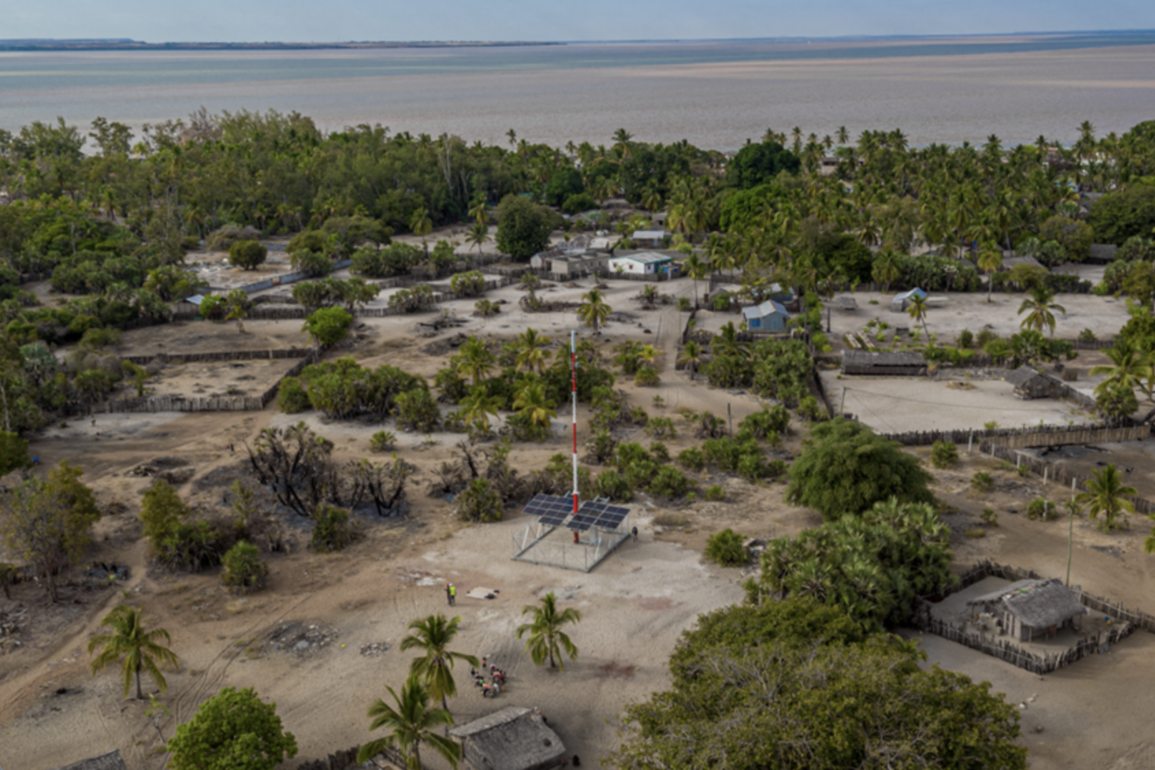
Airtel Madagascar, in partnership with Nokia, recently unveiled the country’s first fully off-grid Rural Connect sites, a development being hailed as a milestone in extending mobile connectivity to previously underserved communities.
The initiative relies on Nokia’s Rural Connect solution, which combines AirScale Radio Access, renewable power systems, and lean civil structures, enabling Airtel to deliver coverage in remote areas where connectivity was largely impossible.
“This collaboration with Nokia marks a transformative step forward in ensuring that no community is left behind in Madagascar’s digital journey,” said Anne Catherine Tchokonte Tcholagheu, CEO of Airtel Madagascar. “By expanding coverage to rural areas, we are not only fulfilling regulatory obligations but opening new doors to education, healthcare, and economic opportunity for thousands of people.”
While the promise of connecting Madagascar’s most remote regions is compelling, it also raises questions about the long-term impact and sustainability of such projects. The International Telecommunication Union estimates that 2.6 billion people globally remain without internet access, 1.8 billion of them in rural areas.
Beyond the technical challenge, expanding connectivity in low-density regions requires attention to affordability, local adoption, and meaningful integration into daily life.
Nokia’s Rural Connect solution is presented as a turnkey answer to these challenges. It reuses refurbished radio access network hardware, integrates renewable power to support fully off-grid operations, and accommodates flexible backhaul via microwave links, user-equipment relay, or LEO satellites.
Mustapha Salah, Head of Mobile Networks for Central, East & West Africa at Nokia, framed the deployment as a scalable and energy-efficient model: “Through Rural Connect, we provide operators with a scalable, energy-efficient, and affordable solution to extend connectivity to the hardest-to-reach communities.”
Yet, the broader question remains: Can these deployments genuinely bridge the digital divide, or do they risk becoming isolated technological showcases? Evidence from similar Rural Connect projects in Ethiopia, Egypt, Cameroon, and Mali suggests measurable short-term gains—one Cameroonian village saw mobile usage quintuple within two weeks of activation, granting access to education, healthcare, and commerce.
These successes are promising but highlight another challenge: sustaining engagement and ensuring that infrastructure translates into real social and economic development over the long term.
Economic arguments for connectivity are compelling. World Bank research suggests a 10% increase in broadband penetration can boost GDP by up to 2.5% in developing economies, while GSMA projects closing the mobile internet gap could add $700 billion to global GDP by 2030. Still, technology alone cannot guarantee these outcomes.

Community adoption, digital literacy, and inclusive policy frameworks are equally critical to ensure that connectivity initiatives achieve more than regulatory compliance.
Nokia’s approach also emphasizes environmental responsibility, integrating circular-economy principles and renewable energy into its Rural Connect deployments. “Working with Airtel Madagascar to deliver our Rural Connect sites exemplifies how innovation and sustainability go hand in hand,” Salah said.
But the environmental footprint of deploying telecom infrastructure in remote areas, coupled with long-term maintenance challenges, warrants careful oversight.
Airtel Madagascar’s effort is ambitious and undoubtedly valuable, signaling Africa’s growing role in pioneering energy-efficient, tech-enabled rural connectivity.
Yet, as governments and companies celebrate these milestones, the success of such projects will ultimately depend on whether they truly empower communities and foster sustainable digital inclusion—or remain impressive technical feats with limited societal impact.