

On a cold afternoon in Nairobi’s Donholm estate last July, a supermarket manager stands between neatly stacked shelves and a back office crowded with files, trying to reconcile what the computer said was in stock with what customers could actually buy. But the spreadsheet on his screen tells one story while the shelves tell another.
Across much of Africa, retail ambition has surged ahead of retail systems. Chain store owners are opening new branches, adding delivery options and building online storefronts. Yet many still rely on manual inventory counts, paper invoices and disconnected accounting tools. Growth, in other words, has often outpaced visibility.
That tension is what KiliMax, a Nairobi-based technology company, says it was created to address. The company has built an AI-powered business management platform tailored for retail and distribution in emerging markets, combining enterprise resource planning, point of sale, e-commerce, customer relationship management and an AI assistant into one system.
The idea emerged from observation rather than theory. After visiting more than 200 stores across eight African countries, the company’s founder saw a recurring pattern. Retailers were eager to modernize but found themselves squeezed between global software that was too expensive and complex, and local tools that were affordable but limited.
“International ERP systems were too complex and expensive. Local tools were simple but limited. Businesses needed something powerful yet practical,” said Justa Kinya, SaaS Branding and Marketing Manager at KiliMax.
While companies in Europe, North America and parts of Asia have increasingly embedded artificial intelligence into forecasting, automation and marketing, many African retailers operate without systems built for their specific constraints, including inconsistent connectivity, tight margins and limited technical training.
“While businesses in more developed markets use AI-powered tools for forecasting, automation, and marketing optimization, many African businesses lack solutions built for their realities — tools that are affordable, practical, and easy to use,” Ms. Kinya said.
KiliMax’s platform is designed to function in precisely those conditions. It integrates with local payment systems and can operate in environments where internet connectivity is unstable. The interface is built to require minimal training, a crucial factor in a sector with high staff turnover.
The company says the early results have been measurable. In businesses using the system, stock turnover rose by 2.8 percent. Stock-outs fell by 70 percent. Overstock was reduced by 45 percent. Month-end financial closing, which in some cases took weeks, was completed in under a day. Cashier training time dropped from one week to one day. Loss rates declined by 35 percent.
For retailers operating on thin margins, such shifts can reshape daily operations. When stock-outs fall sharply, customers are less likely to walk away empty-handed. When overstock is reduced, less capital sits idle in warehouses. Faster month-end closing gives owners a clearer view of cash flow and profitability.
“KiliMax doesn’t just automate tasks — it improves operational efficiency, cash flow, and decision-making,” Ms. Kinya said.
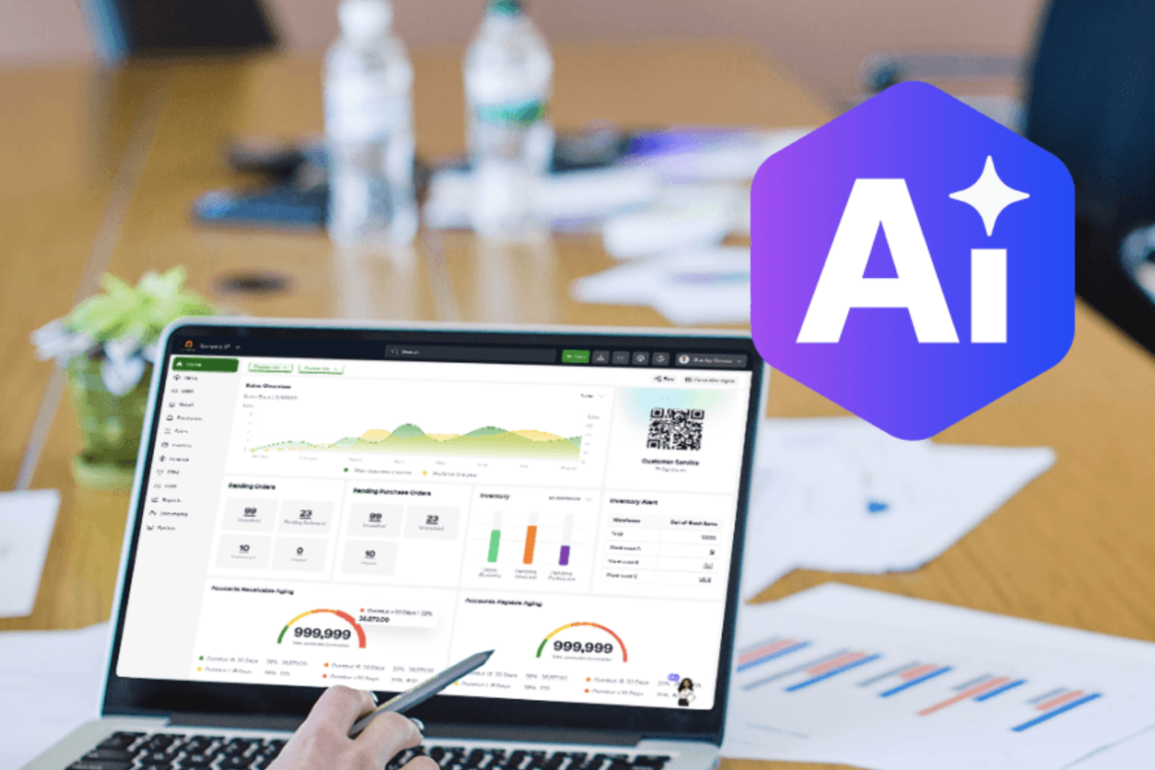
One of the platform’s distinguishing features is the consolidation of sales, inventory and financial data into a single system. Instead of toggling between separate applications or reconciling numbers manually, business owners can see real-time sales insights and inventory levels in one place. The AI component supports demand forecasting and marketing recommendations, including integrations with WhatsApp, Instagram, TikTok and Facebook.
In markets where social commerce is expanding rapidly, such integration allows retailers to respond quickly. A slow-moving product can be promoted instantly online. A spike in demand can trigger faster restocking decisions.

The broader significance lies in what such tools signal about the direction of African enterprise technology. For years, much of the continent’s digital transformation narrative has centered on fintech and mobile money. Retail and distribution, though critical to employment and economic growth, have received less attention.
By focusing on operational infrastructure rather than consumer-facing apps, KiliMax positions itself as part of a quieter shift: the digitization of everyday commerce. If retailers can forecast demand more accurately, reduce waste and tighten financial controls, the ripple effects extend across supply chains.
“KiliMax demonstrates that AI solutions built for local realities can unlock meaningful growth,” Ms. Kinya said. “It proves that technology doesn’t have to be imported or overly complex to make an impact.”
Back in the Nairobi supermarket, the reconciliation process that once consumed hours at the end of each day is now largely automated. Discrepancies are flagged in real time. Sales trends are visible as they unfold. Financial reports that once lagged behind operations now keep pace with them.
The transformation is not defined by glossy dashboards or grand promises. It is measured in fewer empty shelves, shorter closing cycles and clearer numbers at the end of the month.