


Tonight, more than half of the people reading this article will lie down on a sleeping surface that will not give their body what it actually needs. Not because they chose badly, or because they cannot afford better, but because the overwhelming majority of Kenyans have never had access to the evidence base that could tell them what better sleep looks like, feels like, or costs, either in its absence or in its remedy.
That is beginning to change. On World Sleep Day 2026, a date that the World Sleep Society has anchored to the Friday before the March equinox since 2008, the global conversation about sleep has reached a level of scientific and commercial seriousness it has never held before. This year’s theme, ‘Sleep Well, Live Better,’ carries a quiet urgency behind its simplicity.
Sleep disorders, according to the World Sleep Society, threaten the health and quality of life of up to 45 per cent of the world’s population. The CDC in the United States has declared insufficient sleep a public health emergency. And the economic arithmetic is unambiguous: according to a landmark RAND Corporation cross-country analysis, insufficient sleep costs five major OECD economies up to $680 billion in lost GDP every single year.
Kenya is not an OECD country. The cost of its sleep crisis has not been formally modelled. But the biological mechanisms that strip productivity, erode immunity, and shorten lives do not read passports. They operate on tissue, hormones, and neural circuits that are identical in Nairobi and New York. And the clinical data emerging from Kenyan sleep facilities suggests the country is carrying a burden it has barely begun to measure.
The Numbers Behind Kenya’s Sleep Crisis (World Sleep Day 2026)
40% of Kenyans visiting the Sleep Diagnostic and Treatment Centre, Nairobi, are diagnosed with insomnia
30% present with obstructive sleep apnea
15% are diagnosed with parasomnia (disruptive sleep disorders)
45% of the global population affected by sleep disorders (World Sleep Society)
53%+ of adults worldwide get quality sleep fewer than 4 nights a week (ResMed Global Sleep Survey, 2026, n=30,000)
83% of adults globally report active barriers to restful sleep (ResMed, 2026)
80% of people with sleep apnea globally have never been diagnosed (Samsung Health, 2026)
$680bn annual GDP lost to insufficient sleep across 5 OECD economies (RAND Corporation)
<15 African countries have any formal sleep medicine infrastructure (Wellness Revive, 2025)
2 the number of sleep clinics in Kenya, both urban and cost-prohibitive for most residents
What the science now understands about sleep that previous generations did not
The modern science of sleep is barely four decades old as a serious clinical discipline, and the findings that have accumulated in that time are arresting in their consistency. Matthew Walker, Professor of Neuroscience and Psychology at the University of California, Berkeley, and the author of the most widely read book on the subject, has spent three decades distilling those findings into a single, insistent argument.
“The silent sleep loss epidemic is one of the greatest public health challenges we face in the 21st century,” Walker has said in research and public lectures. In his research, he is direct to the point of provocation: “There does not seem to be one major organ within the body, or process within the brain, that isn’t optimally enhanced by sleep and detrimentally impaired when we don’t get enough.”
The mechanisms are now understood in considerable detail. During the deepest stages of non-REM sleep, the brain activates the glymphatic system, a network of fluid channels that flushes metabolic waste from neural tissue, including amyloid-beta, the protein whose accumulation is associated with Alzheimer’s disease.
Walker’s research has shown that during deep, slow-wave sleep, the glymphatic system clears as much as 40 per cent of the total daily amyloid-beta accumulation. A single 36-hour period of sleep deprivation, by contrast, can increase amyloid levels by 25 to 30 per cent.
The metabolic consequences are equally stark. Walker has written that inadequate sleep, even moderate reductions sustained for just one week, disrupts blood sugar levels severely enough that the resulting profile would, under clinical criteria, be classified as pre-diabetic.
Separately, sleep deprivation dysregulates the hormones that govern appetite: it increases ghrelin, the signal that drives hunger, while suppressing leptin, the signal that communicates satiety. The result is that a sleep-deprived person tends to overeat not because of poor discipline but because the hormonal feedback loop governing consumption has been biochemically distorted.
“The best bridge between despair and hope is a good night’s sleep.” – Prof. Matthew Walker, UC Berkeley, author of Why We Sleep
Walker’s summary of what the research ultimately implies is bracing: “Routinely sleeping less than six or seven hours a night demolishes your immune system, more than doubles your risk of cancer, is a key lifestyle factor determining whether you will develop Alzheimer’s disease, disrupts blood sugar levels so profoundly that you would be classed as pre-diabetic, and increases the likelihood of your coronary arteries becoming blocked and brittle.”
The clinical community has long regarded sleep as a secondary concern in patient management. That consensus is now under significant revision.
The dimensions of the problem: insomnia, apnea, and what gets missed
The three conditions dominating Kenyan sleep clinic presentations reflect three distinct failure modes of the sleep system. Insomnia, at 40 per cent of clinic cases, is fundamentally a disorder of hyperarousal. The brain fails to downregulate sufficiently to permit sleep onset or maintenance, often driven by stress, anxiety, or learned associations between wakefulness and the sleeping environment.
Sleep apnea, at 30 per cent, is a structural condition in which the upper airway repeatedly collapses during sleep, causing brief but physiologically significant interruptions to breathing that fragment the sleep cycle. Parasomnia, at 15 per cent, covers conditions ranging from sleepwalking and night terrors to REM sleep behaviour disorder.
Sleep apnea deserves particular attention both for its prevalence and for how systematically it escapes diagnosis. A Samsung Health study published on World Sleep Day 2026, drawing on data from a large global user population, found that 23 per cent of participants showed indicators of sleep apnea risk.
Perhaps more striking, 80 per cent of people with sleep apnea globally have never received a diagnosis. The condition proceeds silently for most sufferers, its nightly episodes invisible to the person experiencing them, while inflicting measurable damage on cardiovascular health, cognitive function, and daytime alertness.
Behavioural sleep scientist Dr. Vanessa Hill, commenting on the Samsung data, explained the mechanism precisely: “The microarousals and awakenings that follow breathing pauses fragment your sleep. Those occurrences can prevent the brain from staying in the REM and deep sleep stages necessary for cognitive and physical restoration.”
Deep sleep, she noted, is the body’s critical physical restoration phase, when growth hormones are released, muscles are repaired, and immune activation occurs. The Samsung data showed that participants with moderate to severe sleep apnea indicators lost an average of eight minutes of deep sleep per night and woke approximately four minutes longer with each arousal. Across months and years, those minutes compound into a chronic deficit with no obvious single cause visible to the sufferer.
“Sleep apnea affects many dimensions of sleep: duration, quality, sleep efficiency and even daytime fatigue. They together help determine our health and functioning.” – Dr. Vanessa Hill, Behavioural Sleep Scientist, Samsung Health World Sleep Day Report 2026
The infrastructure gap in Kenya amplifies these risks substantially. A 2025 analysis of sleep medicine capacity across Africa found that fewer than 15 African countries have any formal sleep medicine activity, whether in the form of specialists, societies, or clinics. Kenya has two sleep clinics, both located in urban Nairobi and both financially inaccessible to most of the population.
The country’s sleep physicians have almost universally obtained their qualifications abroad, returning with certifications from European or North American institutions to a system that has no local training pathway.
Against this backdrop, the role of the sleeping environment itself, the mattress, the pillow, the temperature regulation of the bedroom, assumes greater clinical significance than it might in a country with robust diagnostic and therapeutic infrastructure.
Why the mattress matters more than we acknowledge
The orthopedic and sleep science literature is consistent on a point that the consumer mattress industry has been slower to communicate clearly: the surface on which you sleep is not a passive backdrop to rest. It is an active participant in the quality of the sleep you achieve.
Dr. Casey Slattery, an orthopedic spine surgeon at the Hoag Orthopedic Institute, has articulated the clinical logic plainly: “In general, a firmer mattress is a better choice for most spinal conditions. A soft mattress can cause excessive sinking and flattening of the spine while on your back, or a hammock effect on your side. Firm support aids in keeping the spine neutral, helping to offload intervertebral discs which can be a common source of low back pain.”
The relevance of spinal alignment during sleep to sleep quality itself is direct. A body attempting to maintain postural stability on an unsupportive surface recruits muscular effort and generates sensory signals that interrupt the deeper stages of sleep. Conversely, a surface that allows neutral spinal alignment and adequate pressure distribution reduces arousal signals, supports the transition to slow-wave and REM sleep, and allows the restorative processes that Walker and others have documented to proceed without interference.
Temperature regulation adds a further dimension. Research in sleep physiology has established that the body must drop its core temperature by approximately one degree Celsius to initiate sleep onset. The sleeping environment, and the mattress in particular, plays a central role in facilitating or obstructing that thermal drop.
A mattress that traps heat around the body delays and fragments sleep onset, pushing the sleeper into lighter phases and increasing nocturnal arousal. In a climate like Nairobi’s, where ambient temperatures routinely remain elevated through the night, this is not a marginal concern.
“Firm support aids in keeping the spine neutral, helping to offload intervertebral discs which can be a common source of low back pain.” – Dr. Casey Slattery, Orthopedic Spine Surgeon, Hoag Orthopedic Institute
What Silentnight launched, and how it responds to the science
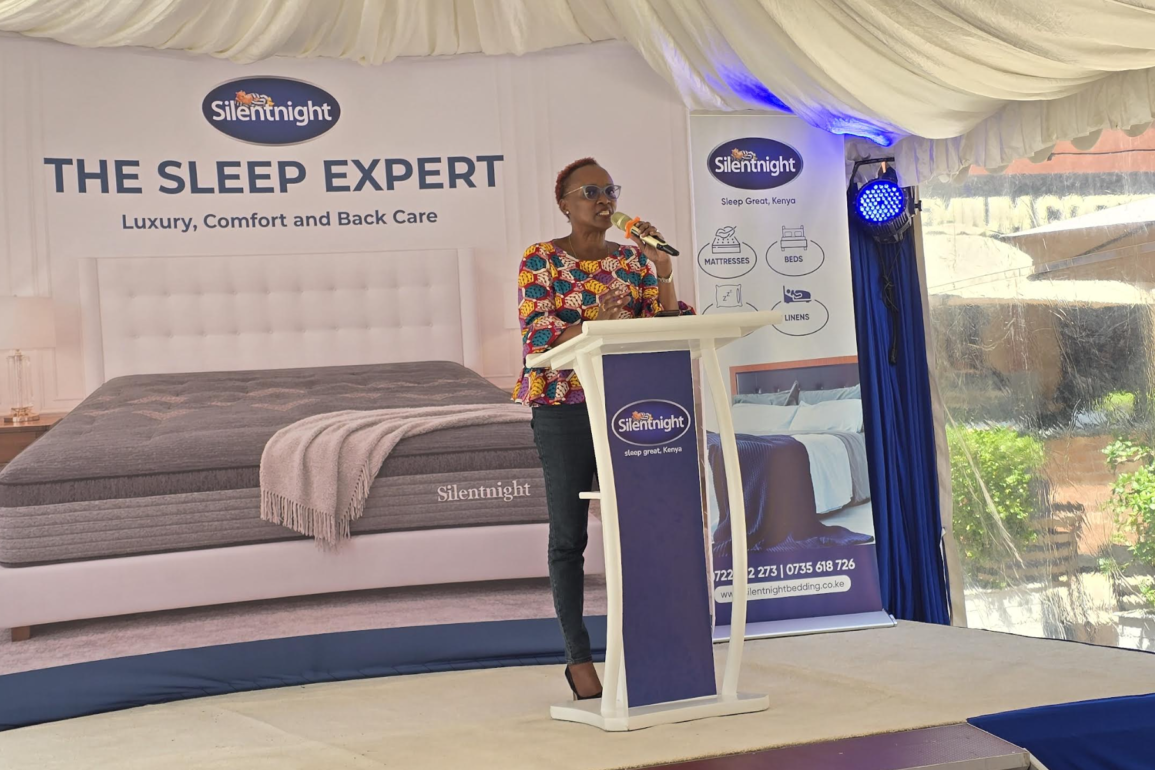
UK company Silentnight’s World Sleep Day launch at The Hub, Karen, Nairobi on March 13 was not simply the unveiling of five new mattress designs. It was a positioning statement: that a Kenyan company has chosen to compete on the quality axis that the clinical and sleep science literature says actually matters.
General Manager Kate Katisya set the tone from the opening remarks. “There is a need for better sleep in Kenya even as we celebrate World Sleep Day. Without good sleep we lose our productivity. Our role is to create great sleeping solutions,” she said.
The framing was deliberate: productivity, not luxury, as the primary value proposition. In an economy where the productive capacity of the workforce is directly tied to the quality of the rest it recovers on each night, that is not merely a marketing claim. It is an economic argument.

The five-tier range reflects a calculated attempt to map product architecture onto the stratified realities of the Kenyan market. At the apex sits the Royal, a premium luxury mattress. Below it, the Back Rest Plus incorporates the company’s most advanced orthopedic technology, targeting spinal support and sustained back health with materials and spring configurations calibrated to clinical requirements.
The Back Rest occupies the next tier, focusing on lumbar and dorsal relief. The Beauty Dream addresses middle-class comfort needs, and the Serenity, the company’s established flagship product distributed widely through supermarket networks, anchors the accessible end of the range.
George Odero, Silentnight’s Supply Chain Manager, described the range’s three-axis philosophy: “The first factor is comfort, the second is luxury, and the third is price. So every mattress is designed to fit every Kenyan, from children, the youth, the elderly and those aim for luxury.”
The Royal, Back Rest Plus, and Back Rest all come with a detachable upper layer, an engineering choice directly responsive to orthopedic and adaptive use cases. For customers managing chronic back conditions, post-surgical recovery, or age-related changes in pressure sensitivity, the ability to modify the sleeping surface without replacing the entire mattress represents a meaningful clinical and economic advantage.
Odero explained the core technologies: “We have used modern technology that automatically regulates temperature within the sleeping environment, while also addressing cases of people with allergies or those who sweat during sleep.” He added: “It enables breathability and motion isolation so when you move in the bed you don’t interfere with the sleep of someone else.”
That second point, motion isolation, commands more weight when placed alongside the research evidence. The ResMed 2026 Global Sleep Survey, which surveyed 30,000 adults across 13 countries, found that 80 per cent of people who share a bed with a partner experience disrupted sleep because of that partner’s movement.
Women are disproportionately affected by a partner’s snoring and breathing disturbances. In a country where housing density and family sleeping arrangements frequently mean multiple people sharing a single bed or mattress, motion isolation technology is not an optional premium feature. It is a basic equity in sleep quality between partners and between generations.
“We have used modern technology that automatically regulates temperature within the sleeping environment, while also addressing cases of people with allergies or those who sweat during sleep.” – George Odero, Supply Chain Manager, Silentnight
Guided selection and the expert at point of sale
One element of the Silentpnight model that directly addresses the information gap in consumer mattress selection is the deployment of sleep experts across its retail network. Odero explained: “There are several sleep experts at the various points of merchandise where they help buyers choose the right mattress according to body weight and room aeration.”
The approach reflects an emerging understanding in retail sleep health that the mattress selection process, when done with the same personalisation logic as a shoe fitting or an optical prescription, produces materially better outcomes than a consumer choosing by price and firmness alone.
The underlying technology supports that personalisation. “We are looking to accessorise the mattress sets to allow purchase flexibility. Our technology involves next generation spring tension that matches a sleeper’s body size and weight, keeping the mattress balanced at all times,” Odero said. The range is backed by warranties of between seven and 20 years, a signal of manufacturing confidence and a practical argument in a market where the total cost of ownership calculation often favours a better initial purchase over repeated cheap replacements.
The manufacturing case: what Tom Onguru sees in a mattress
Tom Onguru, Head of Strategy at the Kenya Association of Manufacturers, placed Silentpnight’s launch in a frame that extended beyond individual sleep health. “We need to evaluate our sleep to make sure we are getting the right sleep quality. Our mandate is to ensure that we create advanced prosperity through sustainable industrialization,” he said. “One of our pillars in our recently-launched priority agenda is global competitiveness. We encourage our members to be competitive. When we see new innovation like this, we get excited because it is a clear demonstration of progress.”
Onguru’s framing touches on a strategic reality that goes beyond Silentnight’s specific product range. Kenya’s manufacturing sector operates under persistent competitive pressure from imported consumer goods produced at scale in markets with lower cost structures.
A domestic company developing and deploying next-generation spring technology, temperature-regulating materials, and orthopedic sleep science expertise is mounting a competitive argument that cannot be replicated simply by lowering prices: the argument that locally made can be technically differentiated, and that the Kenyan market deserves a product designed for Kenyan bodies, Kenyan climates, and Kenyan economic realities across the full income spectrum.
Where to find Sleepnight
Sleepnight operates retail showrooms and experiential centres across Kenya’s main urban centres. In Nairobi, locations include Sarit Centre, Imaara Mall, Valley Arcade, The Hub, Greenspan, and Garden City. The company also has a presence in Mombasa, Eldoret, Kisumu, and Nakuru. Dedicated sleep centres offering a more extended selection experience are located in Ngong, Kilimani, T-Mall, Thika, Nyeri, and Machakos.
The supermarket partnership channel, through Naivas and Quickmart, extends the Serenity range to consumers who would not typically enter a dedicated mattress outlet. The company has also formed partnerships across retail, financial, logistics, health, and education institutions to expand reach and payment flexibility.
Dr. Lourdes DelRosso, World Sleep Day Co-Chair for 2026, captured the occasion’s underlying message in terms that are difficult to argue with: “Sleep is not a luxury. It is a biological necessity. World Sleep Day is an opportunity to translate sleep science into action, empowering communities to prioritize sleep as a cornerstone of health.”
For Kenya, the translation from science to action runs through the same barriers it always does: inadequate diagnostic infrastructure, limited specialist capacity, low public awareness, and a consumer market that has historically been told to make peace with whatever surface was available.
What the data from the Sleep Diagnostic and Treatment Centre, the ResMed global survey, the RAND economic model, and two decades of Walker’s research at Berkeley all agree on is this: peace is expensive. It is paid in immune compromise, metabolic disruption, cognitive erosion, and years of life quietly shortened by the accumulated debt of nights that did not restore what the day had spent.
The mattress is not the whole answer. But it is the floor on which everything else rests.