
In a continent urbanizing faster than any other, African policymakers, investors and city leaders will gather in April in Kenya’s capital for a forum aimed at confronting one of the defining challenges of the century: how to house and sustain hundreds of millions of new urban residents.
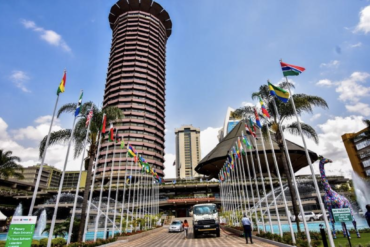
The Government of Kenya, in partnership with the African Union Commission, said it is ready to host the Second Africa Urban Forum, or AUF2, from April 8 to 10 at the Kenyatta International Convention Centre.
The meeting comes at a moment of stark demographic change. Africa’s urban population is projected to nearly triple by 2050, reaching about 1.5 billion people, according to United Nations estimates. Already, the continent adds roughly 20 million urban residents each year, more than any other region. Yet infrastructure and housing have struggled to keep pace: the African Development Bank estimates the continent faces a housing deficit of more than 50 million units, with demand rising steadily.
Held under the theme “Adequate Housing for All: Advancing Socio-economic and Environmental Transformation towards the Realization of Agenda 2063,” the forum is expected to bring together heads of state, ministers, mayors, investors, academics and civil society groups.
“We are honoured to host Africa and the world in Nairobi for AUF2. As African cities expand rapidly, we must reimagine housing as a driver of economic opportunity, innovation and environmental sustainability. This Forum provides a unique platform to accelerate practical solutions and partnerships that will transform urban living for millions of Africans,” said Alice Wahome, Kenya’s cabinet secretary for housing and urban development.
The gathering is intended to support implementation of Agenda 2063, the African Union’s long-term development plan, while also aligning with global frameworks such as the Sustainable Development Goals. Organizers say discussions will focus on financing models for affordable housing, climate-resilient infrastructure, and the role of technology in urban planning.
Urbanization has long been tied to economic growth, but in Africa it has also exposed structural gaps. About 60 percent of urban residents in sub-Saharan Africa live in informal settlements, according to UN-Habitat, often without reliable access to water, sanitation or electricity. Climate change is compounding those vulnerabilities, with floods and heat waves increasingly affecting dense cities from Lagos to Nairobi.
“The next frontier for Africa lies in building cities that are both green and resilient, cities that can withstand climate shocks while unlocking economic opportunities for their citizens. AUF2 will provide a continental platform to deepen policy coherence, mobilize partnerships and scale transformative investments in sustainable housing, infrastructure and urban services,” said Dr. Mary Mbole-Kariuki, an African Union representative in Kenya.
For Kenya, hosting the forum is also a statement of ambition. Nairobi has positioned itself as a diplomatic hub for urban policy, home to the United Nations’ human settlements program, UN-Habitat, and a growing network of development finance institutions and technology firms working on smart-city solutions.
The forum is expected to showcase African-led innovations, from modular housing and green building materials to digital land registries and new financing tools aimed at lowering the cost of home ownership. It will also highlight investment opportunities in infrastructure, a sector the African Development Bank estimates requires more than $130 billion annually to meet demand.
Organizers say a key outcome will be a “Nairobi Declaration,” a policy roadmap intended to guide urban development across the continent and strengthen Africa’s voice in global discussions on cities.
Whether such commitments translate into tangible change remains an open question. Previous regional forums have produced ambitious pledges, but implementation has often lagged behind population growth. Still, with African cities expected to account for a growing share of global economic activity in the coming decades, the stakes are rising.
For now, Nairobi is preparing to host a conversation that could shape how and where the continent’s next billion urban residents live.